I wondered if Emilie Baker Loring’s second novel would have as many literary and cultural references as her first. Ha! Of course it did! The opening pages averaged two per page, and my paperback copy has 167 pages. Better make a full pot of tea for this one!
Here Comes the Sun! begins with two poems on the dedication pages. I read them remembering that Emilie had just lost her sister Rachel to a muscle wasting disease. As the Bakers always did, she summoned her innate optimism, her confidence that “there is always love.”
Poetry
Ralph Waldo Emerson
The sense of the world is short,--
Long and various the report,--
To love and be beloved;
Men and gods have not outlearned it;
And, how oft soe'er they've turned it,
'Tis not to be improved.
-- "Eros" by Ralph Waldo Emerson (1803-1882)

Richard Watson Gilder
More bright the East became, the ocean turned
Dark and more dark against the brightening sky--
Sharper against the sky the long sea line.
The hollows of the breakers on the shore
Were green like leaves whereon no sun doth shine,
Though sunlight make the outer branches hoar.
From rose to red the level heaven hurned;
Then sudden, as if a sword fell from on high,
A blade of gold flashed on the ocean's rim.
-- excerpt of "Prelude" from The New Day (1875) by Richard Watson Gilder (1804-1909)
Later, she quotes a poem that always speaks to me:
Henry Wadsworth Longfellow
All houses wherein men have lived and died
Are haunted houses. Through the open doors
The harmless phantoms on their errands glide,
With feet that make no sound upon the floors.
We meet them at the doorway, on the stairs,
Along the passages they come and go,
Impalpable impressions on the air,
A sense of something moving to and fro.
There are eight more stanzas, if you want to look them up.
Robert Browning
She whistled the air of “God’s in His heaven, all’s right with the world!” from start to finish. (p 50)
The quoted line is from the poem “Pippa” by Robert Browning:
The year’s at the spring,
And day’s at the morn;
Morning’s at seven;
The hill-side’s dew-pearl’d;
The lark’s on the wing;
The snail’s on the thorn;
God’s in His heaven–
All’s right with the world!
I didn’t find the poem set to music that could be whistled, but Helen Hansen’s short story, “Heralds of Spring,” printed in 1922 in the Calgary Herald has lines about singing meadow larks that seem apropos: “‘Tis spring! ’tis spring; God’s in his heaven, all’s right with the world!’ That’s what they sang, and the beautiful clear notes, now high, now low, made us feel full of happiness.”
“Sweetie Peach”
“You didn’t ask us to butt in, did you, Sweetie-peach?” she crooned to the spaniel before she relinquished him. (p 3)
“Sweetie Peach” was a 1920 story by Sophie Kerr, a one-time editor of The Woman’s Home Companion and author of hundreds of short stories about women with gumption and ambition. “Sweetie Peach” is a husband’s pet name for his wife, a term of endearment. The premise of the story is that women can often get a man to change in ways that they desire, and men can seldom do the same with women, but this man tries and succeeds.
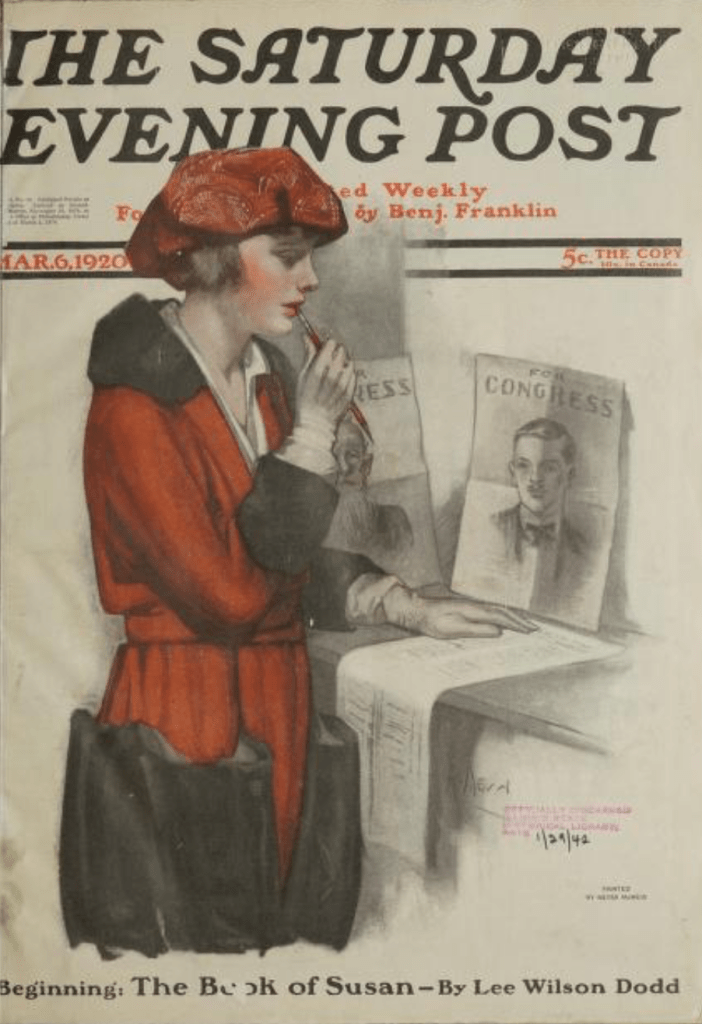
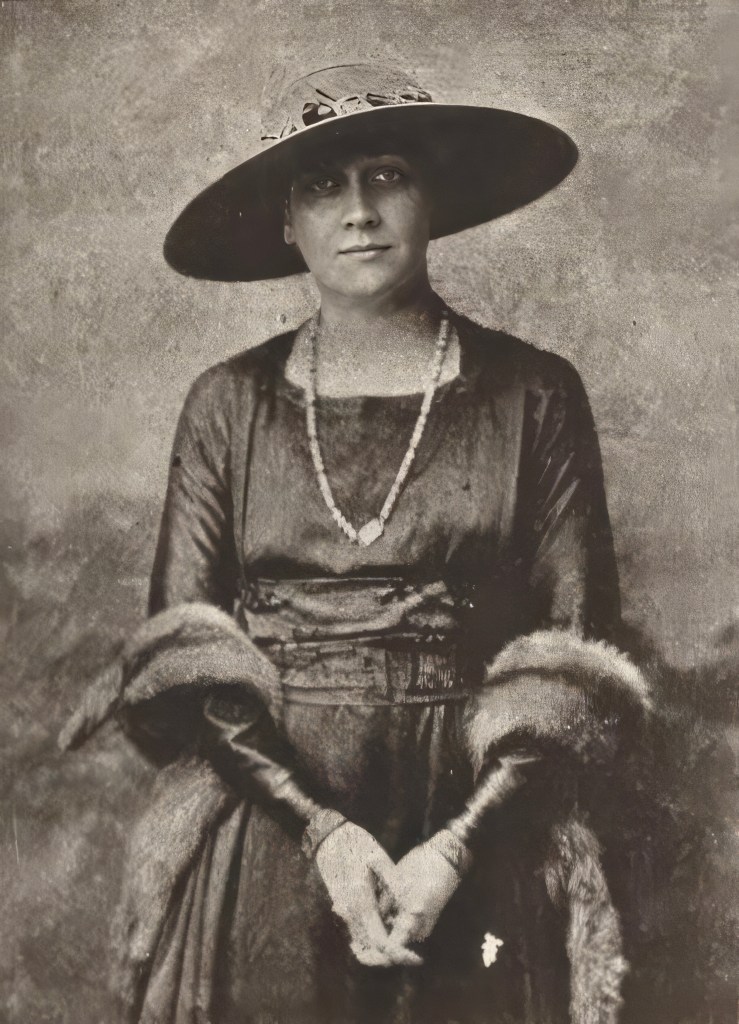
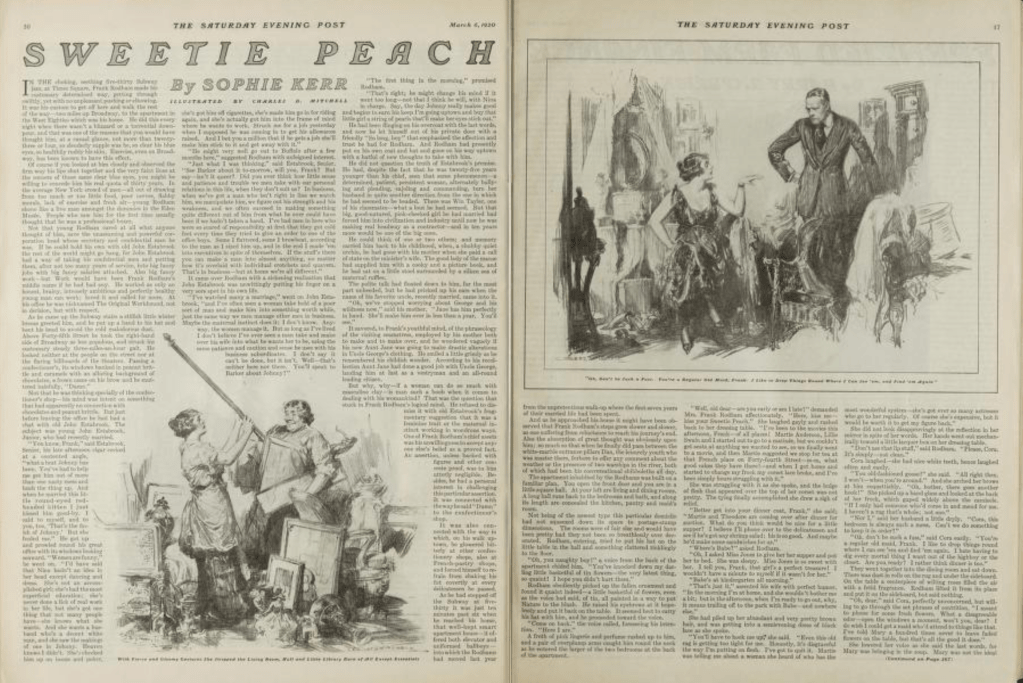
Cora Rodham’s figure and housekeeping have both seen better days, and her husband, Frank—I’d like to say that he inspires her to connect with her desires for her best self, but honestly, he complains and shames her, then leaves on a business trip for several months. When he returns, Cora has lost weight, dresses becomingly, and keeps their home as neat as a pin.
Emilie had a similar theme in “The Lady and the Looker,” written a year before “Sweetie Peach.” Anne’s boss praises her work but says her appearance needs attention:
“You have the making of an exceptional secretary. You are unselfish and considerate of those about you, but you lack faith in yourself; you’re sloppy in appearance… The workers here call you ‘The Lady.’ They call Miss Delaney ‘The Looker.’ Why can’t you be both?”
Although embarrassed, Anne accepts his evaluation and resolves to do better:
“Anne, you’re backsliding! You know you’re a raving beauty,” she reminded herself with a laugh.”
The 1920 story was followed by a movie, “The House that Jazz Built,” in April 1921 that kept the name “Sweetie Peach” before the public.
Fashion
“the fashion of which went out with Tipperary and long skirts” (p 35)
We can see Emilie’s hemline rise as the 1920s progressed:
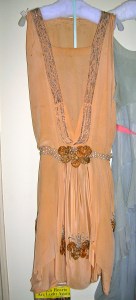
She refers to the song, “It’s a long way to Tipperary,” which was wildly famous throughout World War I and less so later on.
It’s a long way to Tipperary,
It’s a long way to go.
It’s a long way to Tipperary,
To the sweetest girl I know!
Goodbye, Piccadilly,
Farewell, Leicester Square!
It’s a long long way to Tipperary,
But my heart’s right there.
“First cousin to a Worth or a Doucet?” “Now I know where your women friends get their clothes.” (p 9)
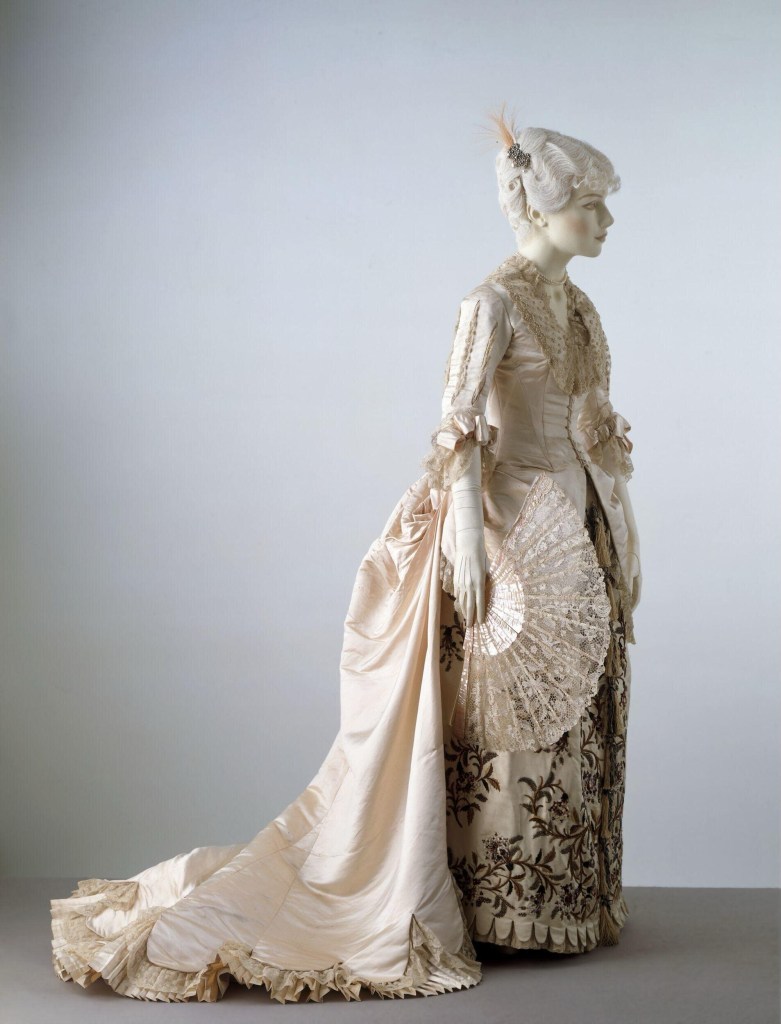
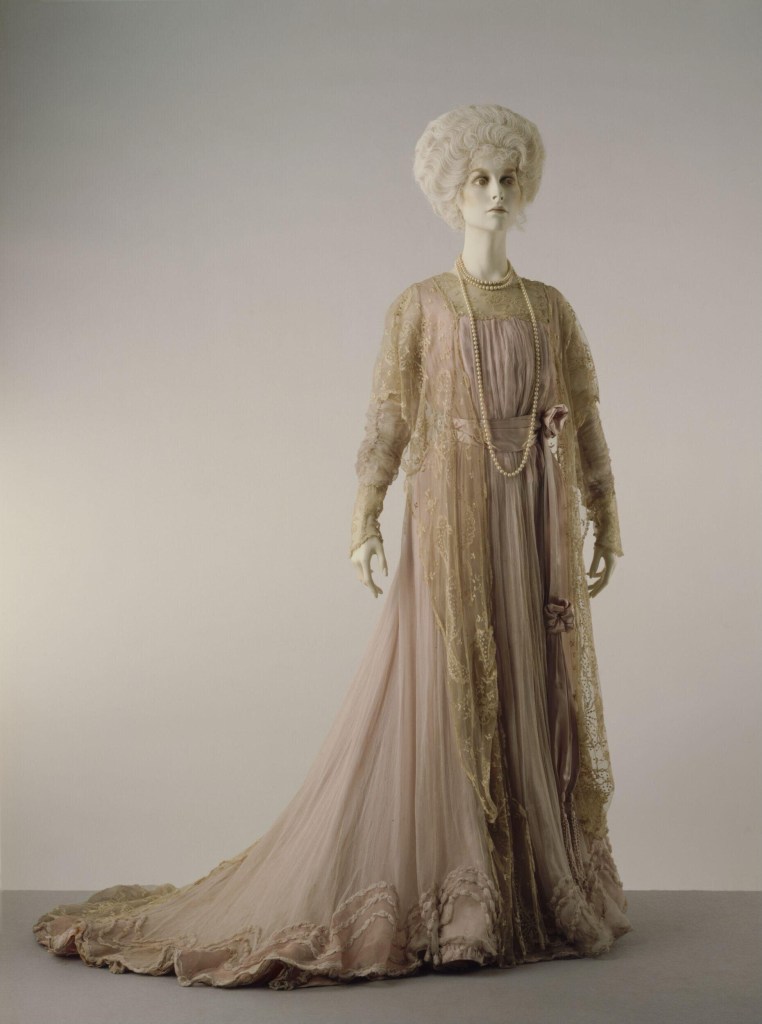
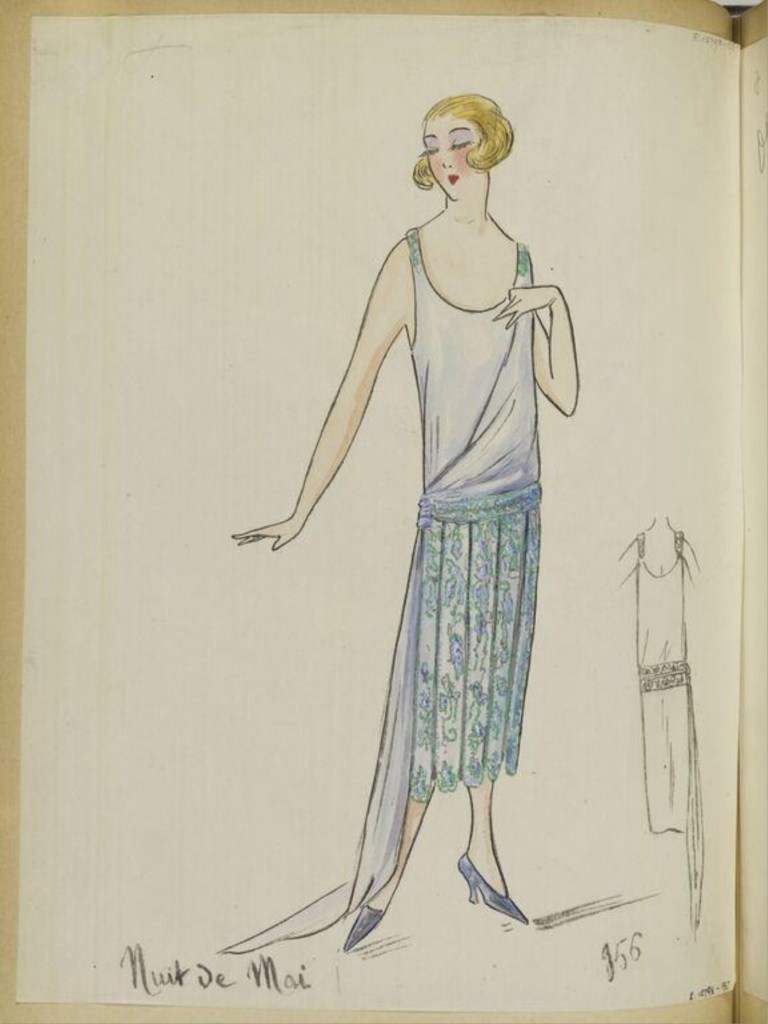
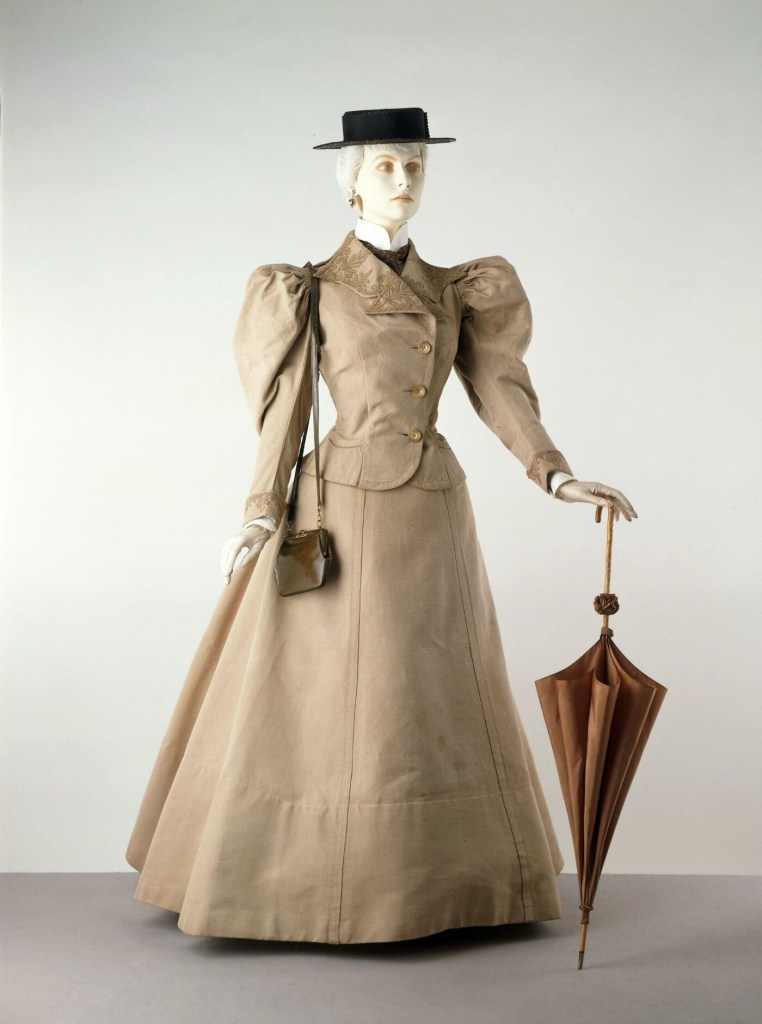
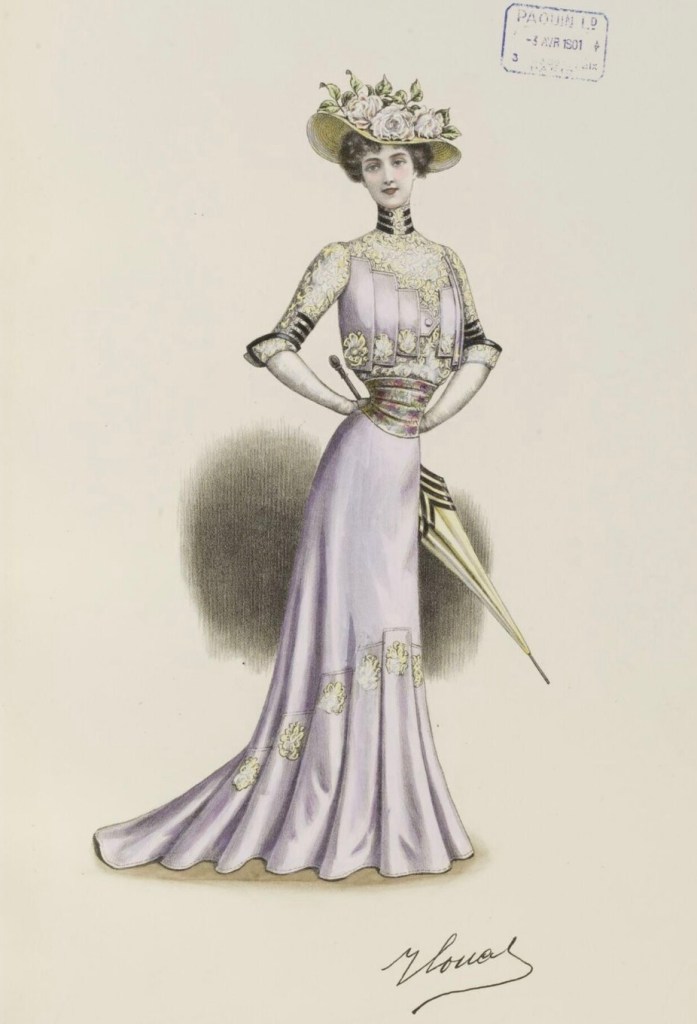
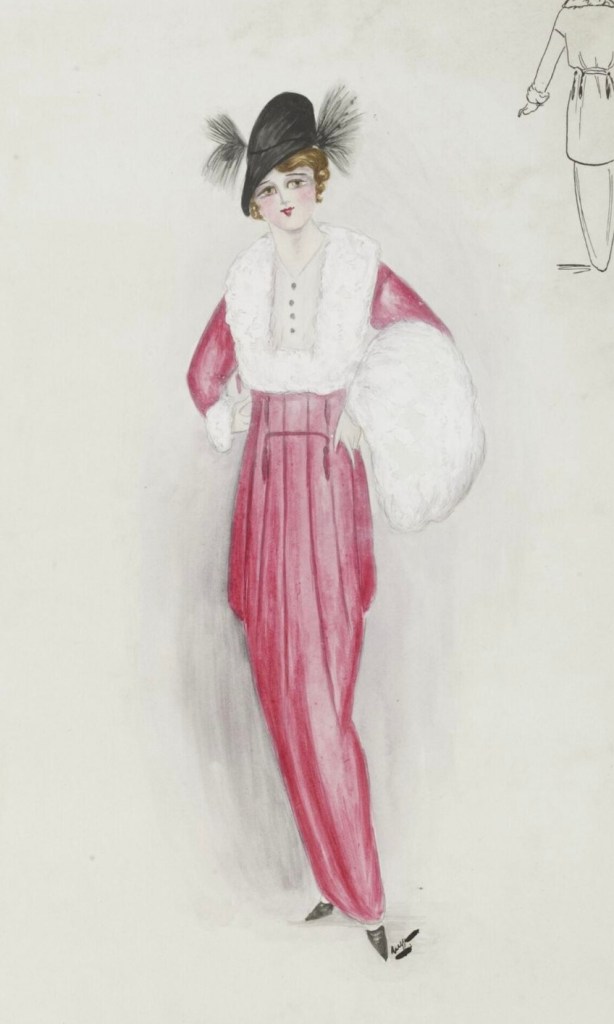
Of the two, I think I might have liked the overall appearance of Doucet better, but Worth’s 1900 tea gown would have been far more comfortable than Doucet’s! Again, see the hemline rise from 1913 to 1924.
Current Events and Culture
Kohinoor Diamond
“no excuse for your not glittering like the Kohinoor tonight” (p 36)


Perhaps the most famous diamond in the world, the Kohinoor was “acquired” by Queen Victoria in 1849 and cut to its current 105.6 carat weight. It is set into the crown of Queen Elizabeth, the Queen Mother, and is displayed with the other Crown Jewels in the Tower of London.
King Tut
“. . . until I, the real I, have been buried as deep as poor King Tut.” (p 8)
King Tut’s tomb was discovered by archaeologist Howard Carter in November 1922.
Every Day in Every Way
“Every day in every way you’re getting redder and redder,” she laughed… (p 54)
This was a humorous take on a famous affirmation of the day. Émile Coué of France was a psychologist and hypnotist who understood the power of suggestion and autosuggestion. He introduced a method of self-improvement that called for a twice-daily affirmation to imprint on both the conscious and subconscious mind:
"Every day in every way I am getting better and better."

The mantra inspired a song, and variations on the lines soon appeared in commercials, newspapers, comedies, stage, and writing of all sorts–including Here Comes the Sun!
Easy Money
Moored to a float on the shore was the slim launch, Easy Money, in which she and Billy had shot the rapids. (p 78)
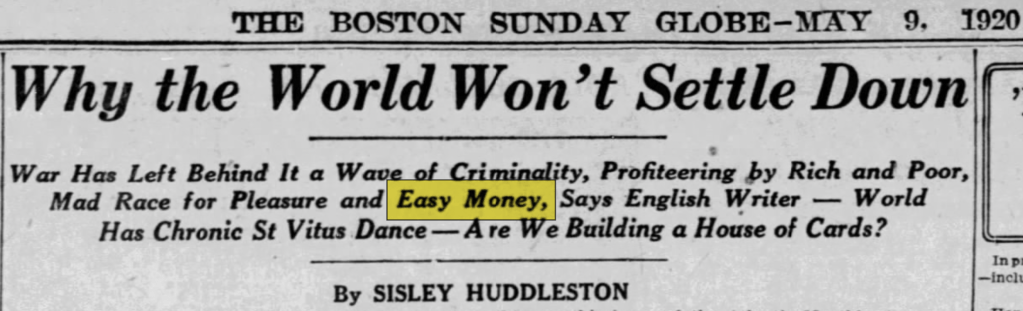
From organized crime to a hot stock market, “Easy Money” was a popular term in the 1920s.
As Maine Goes
“Somewhere she has heard that classic ‘As Maine goes so goes the country.'” (p 113)
Maine used to hold its state elections in September, before the national election in November. Its results were seen as an indicator of where the population’s preferences were heading.
Toot Toot Tootsie
“My last classical purchase was ‘Toot! Toot! Toots, good-bye!” She whistled a bar of the popular air. (p 124)
“Toot Toot Tootsie, Good bye” was recorded by Al Jolson in 1922:
“Toot Toot Tootsie goodbye
Toot Toot Tootsie, don’t cry
That little choo-choo train that takes me
Away from you, no words can tell how sad it makes me
Kiss me Tootsie, and then, do it over again”
Phonograph
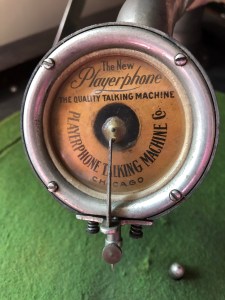
“There’s only me an’ the phonograph. When I want to hear talk I turn the crank; when I’ve heard all I want I shut the thing off, which is something you can’t do with a person.” (p 42)
Hooverizing
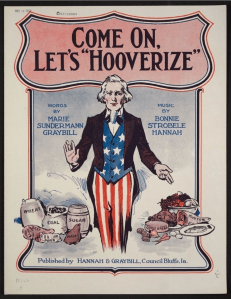
“Hooverizing on colors was a measure of economy with us Lorraines…” (p 46)
History
“I learned Lincoln’s Gettysburg speech as soon as I learned my prayers and I was brought up on Webster’s orations.” (p 10)
Gettysburg Address
“Four score and seven years ago our fathers brought forth upon this continent a new nation, conceived in liberty, and dedicated to the proposition that all men are created equal. [Applause.] Now we are engaged in a great civil war, testing whether that nation or any other nation so conceived and so dedicated can long endure. We are met on a great battle-field of that war; we are met to dedicate a portion of that field as the final resting-place of those who here gave their lives that that nation might live. It is altogether fitting and proper that we should do this. But, in a larger sense, we cannot dedicate, we cannot consecrate, we cannot hallow this ground. The brave men, living and dead, who struggled here, have consecrated it far above our poor power to add or to detract. [Applause.] The world will little note nor long remember what we may say here; but it can never forget what they did here. [Applause.]
It is for us, the living, rather to be dedicated here to the unfinished work that they have thus far so nobly carried on. [Applause.] It is rather for us here to be dedicated to the great task remaining before us; that from these honored deas we take increased devotion to that cause for which they here gave the last full measure of devotion; that we here highly resolve that those dead shall not have died in vain. [Applause.] That the nation shall, under God, have a new birth of freedom; and that governments of the people, by the people and for the people, shall not perish from the earth.” [Long continued applause.] (18 November 1863, The Liberator)

Daniel Webster
Daniel Webster, at the dedication of the Bunker Hill Monument:
“The principle of free governments adheres to the American soil. It is bedded in it, immovable as its mountains…But there remains to us a great duty of defence and preservation; and there is opened to us, also, a noble pursuit, to which the spirit of the times strongly invites us. Our proper business is improvement. Let our age be the age of improvement. In a day of peace, let us advance the arts of peace and the works of peace. Let us develop the resources of our land, call forth its powers, build up its institutions, promote all its great interests, and see whether we also, in our day and generation, may not perform something worthy to be remembered. Let us cultivate a true spirit of union and harmony…”
The Bible, Old Testament
Widow’s Cruse
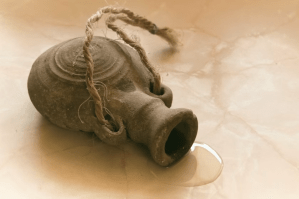
“Can you wonder if she hopes that I will fall in love with someone who can provide a checking account which will resemble the widow’s cruse?” (p 8)
A cruse is an earthenware vessel. In an Old Testament story, a widow’s cruse of oil proved inexhaustible.
Leopard’s Spots
“You can’t change a leopard’s spots.” (p 77)
This Greek proverb appears in the Bible. It was first recorded in English in 1546.
Children’s Literature and Fairy Tales
“I feel like Goldilocks in the House of the Three Bears.” (p 4)
“Keep on feeling secure with Billy and me. We’ll stand guard over the Sleeping Beauty till her Prince Charming arrives.” (p 56)
As she craned forward to watch the car her long neck seemed to lengthen like that of Alice in Wonderland. (p 122)
Always, a reference to Alice’s Adventures in Wonderland in an Emilie Loring novel!
Classic Literature, Mythology
Greek Mythology
“Don’t stand there dumb as though I were that Gorgon female who turned people to stone.” (p 3)
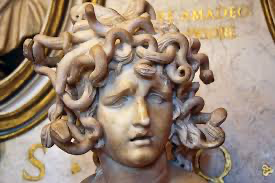
The spaniel… relapsed into the arms of Morpheus. (p 4)
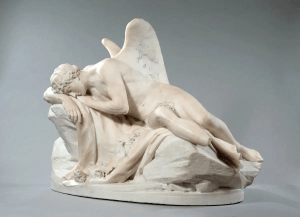
“the new Julie Lorraine rising Phoenix-like from the ashes of the old Julie” (p 8)

“One doesn’t just escape the boatman on the river Styx without learning something.” (p 64)
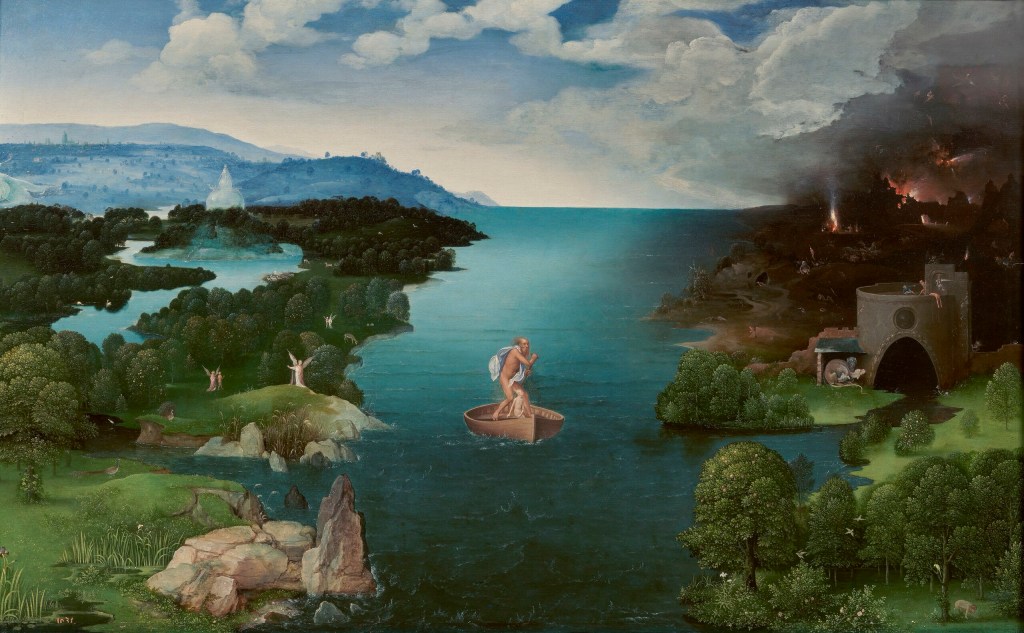
The River Styx is the boundary between the living and the dead in Greek mythology. A boatman delivers souls from one side to the other.
“I know how poor old Hercules felt when Atlas dropped the Earth on to his shoulders.” (p 85)
One of Hercules’ twelve labors was to retrieve golden apples from the Hesperides. Atlas offered to get them, if Hercules would hold the earth for him a while, and Hercules accepted. Atlas didn’t want to take the earth’s weight back again when he returned, but Hercules tricked him into it.
“The Inferno can hold no terrors for me now. I passed through hell before I reached you.” (p 95)
Dante
“Inferno,” the first section of the long poem, The Divine Comedy by Dante Alighieri, ca. 1308-21, is a tour of Hell and the punishments for condemned souls.
John Bunyan
“You try to be your old gay self, but I sense spiritual conflict, poor old Christian lined up against Apollyon”… He was right. The Prince of the City of Destruction urged a break of that marriage contract while she repelled him with the thought, “Whom God hath joined together–” (p 114-5)
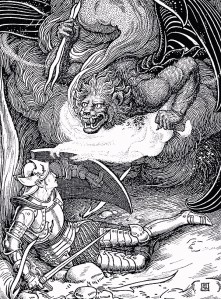
In Pilgrim’s Progress by John Bunyan (1678), Christian journeys through the Valley of Destruction and meets Apollyon, the representation of evil. The monster challenges Christian’s faith and tempts him in every way it can, but Christian remains firm.
Shakespeare
“How sharper than a serpent’s tooth it is to have a thankless niece,” paraphrased Jaffrey. (p 118)
The original is from Shakespeare’s King Lear (ca. 1606-23): “How sharper than a serpent’s tooth it is to have a thankless child.”
Theater
"You remind me of my mother,
my mother was a lot like you,
So many little things you do,
I find...

"I heard that song in a musical comedy last night and the refrain has been phonographing in my head ever since you boarded the train this morning."
 (p 5)
This was a song from “Little Nellie Kelly,” a musical comedy by George M. Cohan that opened in Boston in July 1922 before going to New York.
“‘To-re-a-dor! To-re-a-dor! For thee a fond heart waits. For the-e-e a fond hear-a-art waits!” (p 112)
These are lines from the French opera, Carmen, by Georges Bizet.
Art
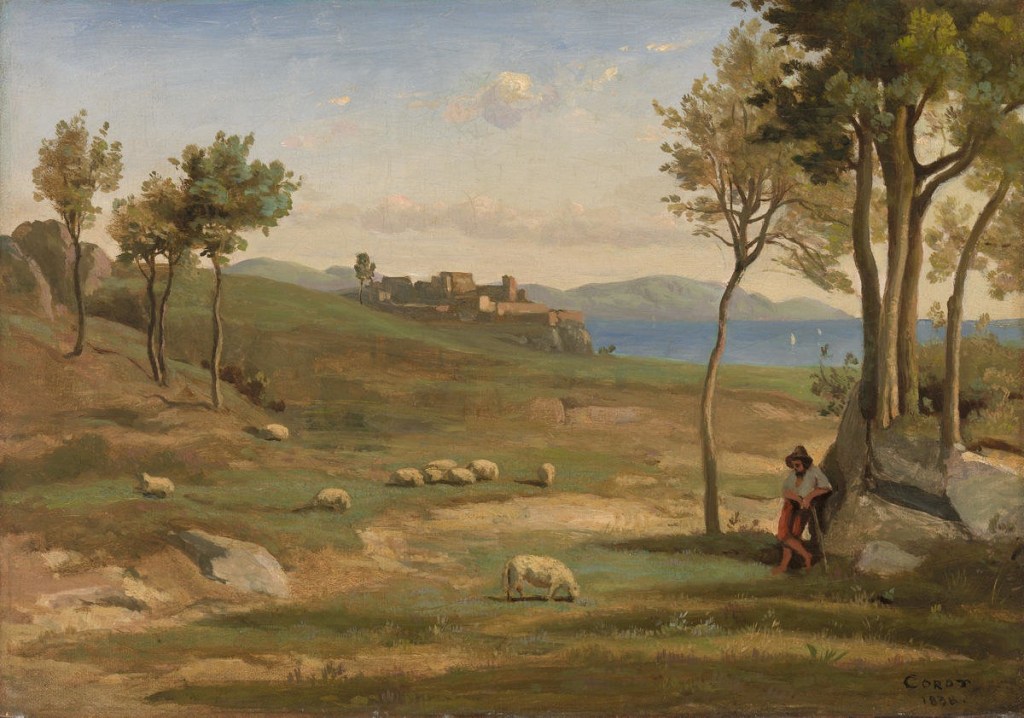
painting by Jean-Baptiste-Camille Corot, 1838
Vocabulary
“he vanished like a hoodoo.” (p 11)
With roots in folk traditions of West Africa, Europe, and Native Americans, hoodoos are conceived of as spiritual beings that help with personal and practical outcomes. They can be tricksters, so there’s always an element of unpredictability about them.
“nine parts demon and one part banshee” (p 12)
In Irish folklore, a banshee is a female spirit that shrieks and wails to announce a death.
soap-box oratory (p 36)
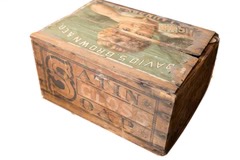
Before corrugated cardboard, items shipped in wooden crates, readily available and pressed into service as informal speaking stands.
Seated on a fair sized boulder in the middle of the beach was the chatelaine of Shorehaven. (p 50)
In my family, a chatelaine is a long, slender piece of fabric that is worn around the neck and holds sewing scissors, needles, thread, and a measuring tape for use in mending, embroidery, etc. But chatelaine can also refer to the mistress of a castle or large household.
“Bien soignée is the term for which you’re struggling,” Julie prompted. (p 51)
Bien soignée means well-groomed and immaculate.
“The Trafford who was buncoed into openin’ up thet mine didn’t quit until he’d run shafts in all directions.” (p 57)
The verb bunco means to swindle. The game Bunco was popular in Gold Rush America and re-popularized in the 1920s.
“If you can’t concoct a best-seller from the facts I am about to relate, plus your hectic imagination, you had better be psycho-analyzed to find your métier.
One’s métier can be a profession, or it can be simply something that one is quite good at.
The Duchess and Her Sapphires
I’ve had a good mental image of the Duchess and her sapphires, thanks to Emilie’s detailed description. In fact, she described it so thoroughly that I’ve always imagined that she was looking at a real portrait as she wrote.
Over the mantel hung the only picture in the room. It was the portrait of a fair-haired woman in stiff blue and gold brocade, with eyes the color of the satin of her gown. Under one plump bare arm was a King Charles spaniel. In the fingers of the other hand, on one of which was a great sapphire, she held a round cracker. There were sapphire buttons on her bodice, sapphire clusters at her ears, a bow of sapphires against her fair hair which was bound about her head in braids. She was beautiful, stately, slightly cynical as she looked down into the vivid face upturned to hers. (p 61)
Try as I might, I have never found a portrait to match Emilie’s description. I’ve imagined it somewhat in the style of John Singer Sargent.
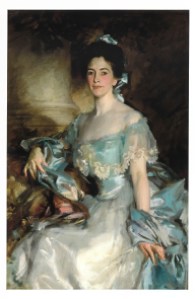
I tried to generate one with Word Press’s AI image creator, entering both Emilie’s description and a request to create it in the style of Sargent. This was the result:

Hmmm… I’m not getting Emilie Loring vibes from this. Maybe a screen version of “The Three Musketeers?”
I tried again with ChatGPT, and it came a lot closer, although I may have imagined the Duchess a bit older than this. What do you think?

Whew! This was a big post! I hope it can tide you over a little while, as I’m headed to Sweden to visit cousins–a bit of R&R that I’ve been looking forward to. I’ll miss Blue Hill this year, but when I get back, let’s plan our annual Emilie Loring Tea.
Hej då!
Happy Landings, Everyone!
 The Emilie Loring Collection
Do you think it really means a cracker like you eat? It feels like an odd choice for a portrait. Perhaps a party cracker? Or maybe there is some other symbolism?
LikeLiked by 1 person
It strikes me as odd, too, but I looked up the history of crackers (!), and they entered household use after having been a staple for seafarers, around the 1850s, and Massachusetts seems to have been their origin for that purpose. If so, and if our Duchess is from that time period, maybe she holds the cracker as a new thing? My original thought was that it was a treat for the dog. 🙂
LikeLike
This was very fun and interesting! I knew a lot of the references, of course, but I appreciate your chasing down the ones I didn’t recognize. I especially had always wondered where th
LikeLiked by 1 person
What a marvelous post, Patti! I think Emilie would be proud of you for recognizing her erudition and bringing it to the attention of her readers almost a century later! Bravo to you for demonstrating that her work, this as one, is not just a fluff romance, but a tapestry of classical references.
(I called my little daughter Sweetie Peach many years ago, knowing I’d read it in one of Emilie’s books but having no idea of the story behind it! 🙂)
Best wishes from a fan of both of you ladies!
–Beverly
LikeLiked by 1 person
Thank you, Beverly. “A tapestry of classical references“ is a great way to describe this aspect of her books. I’m also grateful for your appreciation; I feel rewarded when what I do here is read and enjoyed. My best to you, and Happy Landings!
LikeLike
What an incredible post! Thank you for the enormous amount of time and effort you put into it. I like the 2nd ChatGPT generated Sapphire Duchess image. I have been rather snowed under with live and work but am still around. I appreciate your dedicated posts. I will come back to this and the other one on cultural references several times. There is so much to absorb.
Happy Landings! Enjoy your trip!
LikeLike
Thanks. I sure understand being snowed under. I count it a victory when I get half of my list done and still have time for six hours of sleep. It’s going to be fun to have two weeks of visiting and discovery. (Everyone, keep your fingers crossed that my mom does okay in my absence!)
These literary/cultural posts take longer, but they are fun for me, because I had started thinking there was little left to discover in Emilie’s books, and all of a sudden, I’m discovering so much more. I keep reminding myself that many of these would have been common knowledge to her original readers; her books were very much “of their times.” I’ve asked my writing friends to weigh in on whether Emilie’s books could now be considered “historical fiction,” but so far, the verdict has been no. I’ll keep asking until I get the answer I want to hear. 😀
Kick, frog, kick! and Happy Landings!
LikeLike
This was fascinating. The more I think I notice literary references in Emilie’s books, the more I realize I missed. My sister-in-law called my daughter “Sweetie-Peach” when she was little. I didn’t even know it was a literary reference. The last rendition of the Sapphire Duchess is close to how I imagined it. I always wondered about “the round cracker” in the portrait. Did this perhaps refer to an actual portrait that Emilie saw? Have a wonderful time in Sweden! I’m off to move Here Comes the Sun to the top of my to-read list!
LikeLiked by 1 person
I didn’t know “Sweetie Peach” was a reference, either, until I searched for it. I enjoyed the Trail of Conflict literary post so much that I launched into this one, but wow, what a lot of entries I found, each with a rabbit hole I could have run down, had I allowed myself. I decided to just point the way, and readers can chase them down further, if they want to. Even with only these, Emilie is proving to be quite the humanities course!
I agree that there must have been a real painting of the sapphire duchess–but whose? where? Let’s keep an eye out for it.
LikeLike