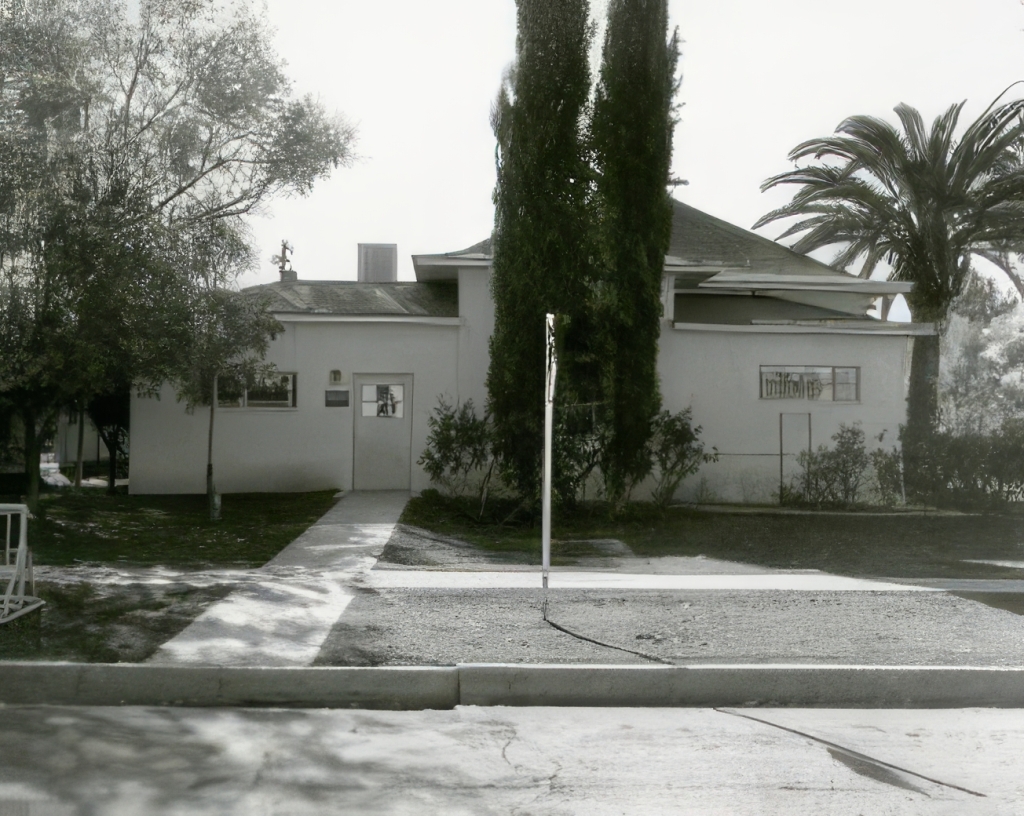

I got my first library card at the Tempe Public Library, on the corner of 5th and Myrtle. I remember entering that evening with my family, selecting my first books, and celebrating at Dairy Queen afterwards. In a family of readers, it was a rite of passage.
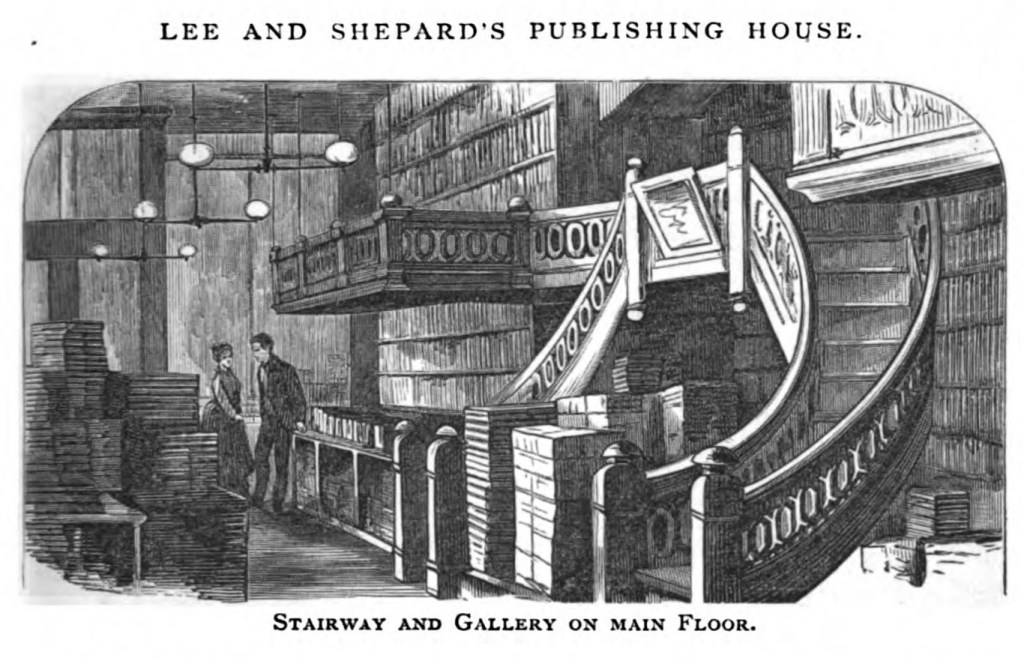
At right and left of the fireplace rose tier upon tier of books. On one side was her grandfather’s library. Sets of Dickens, Thackeray, Macaulay, Irving, Parkman. She smiled as her eyes rested on the Cadell edition of Scott. The Solitary Horseman
Books, no end of them, covered two sides of the room from ceiling to floor. Gay Courage
“Everything is in place except the books. I didn’t dare start unpacking those for fear one might open and I would stop to read a page or two. I’m a book addict.” Hilltops Clear
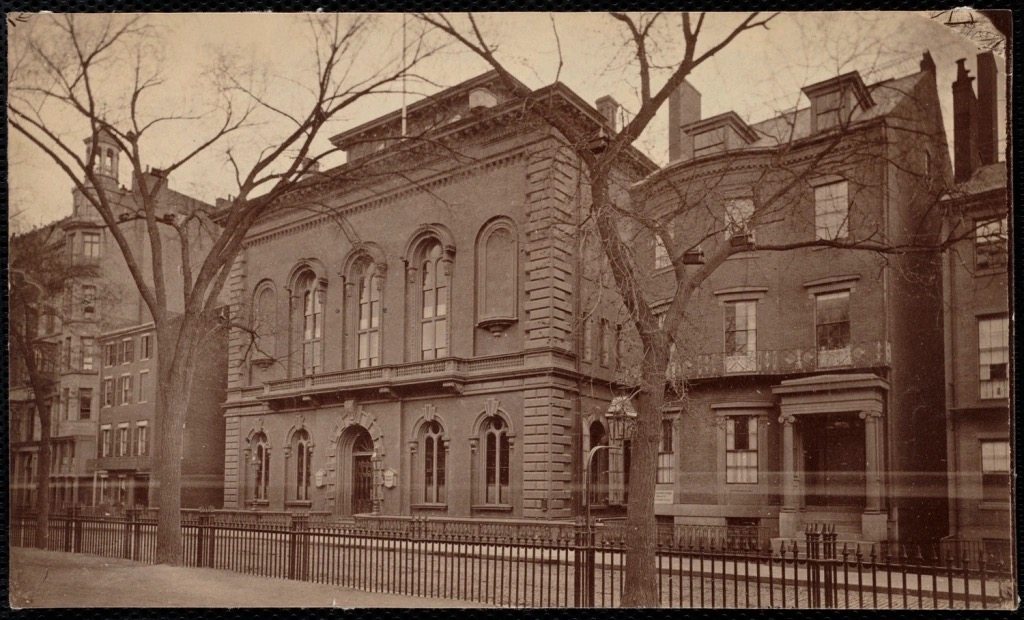


Emilie’s first public library was the old Boston Public Library across from the Boston Common on Beacon Street. I wonder if early records exist to show what she read. When her family moved to the Cape in 1889, their library was in Barnstable, the Sturgis Public Library, and we’ve seen some of the books that the Bakers checked out that summer: “Discover 1889 Summer Reading.” In 1895, the “new” Boston Public Library opened at its present location.
Two hours later, seated at one of the tables in Bates Hall in the Boston Public Library, she snapped the rubber band about her notebook and for the first time since she had sat down regarded other persons at the table under the green-shaded lights. As Long As I Live

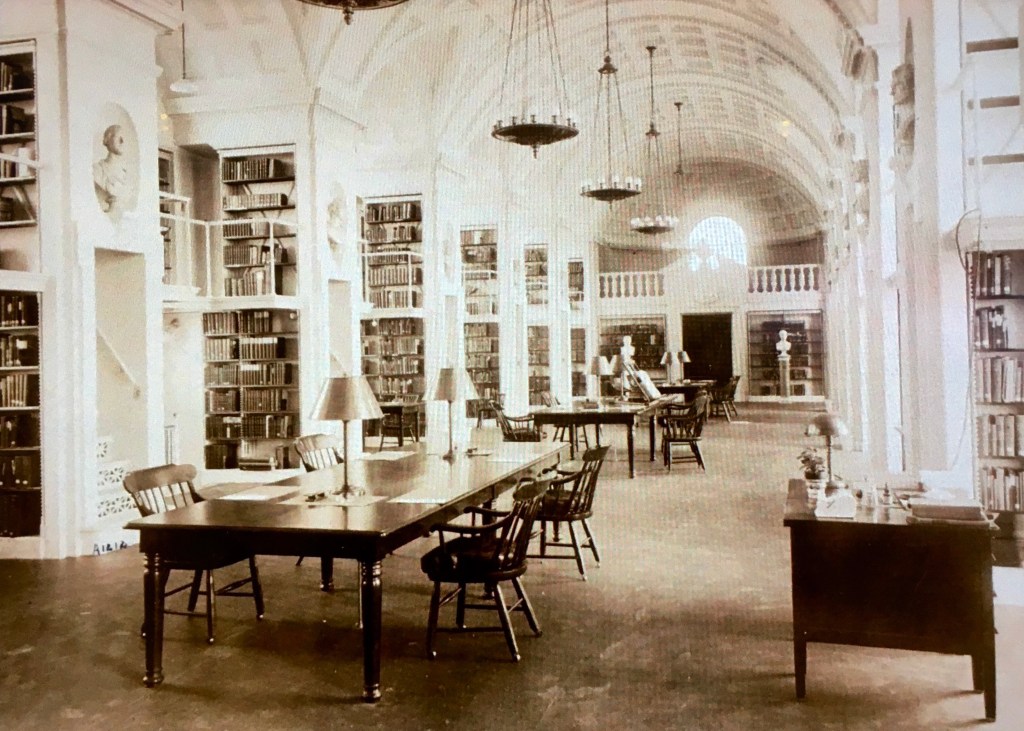
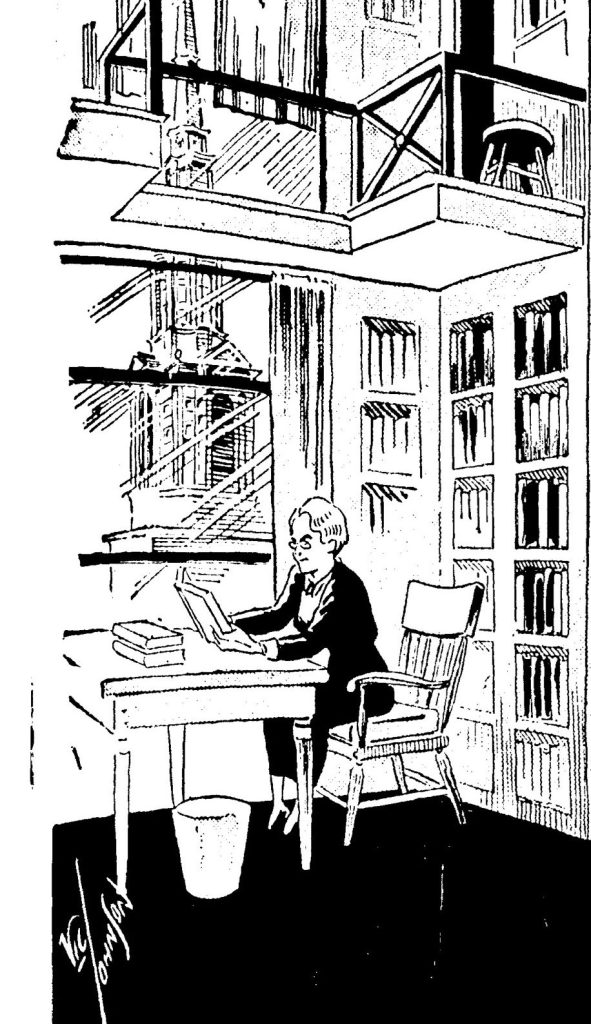
Emilie Loring’s “home library” became the Boston Athenaeum, where she wrote each weekday for more than twenty years. It’s a reverent place, steeped in history and art, but with large, clear workspaces for readers to start fresh and think new thoughts for the day.

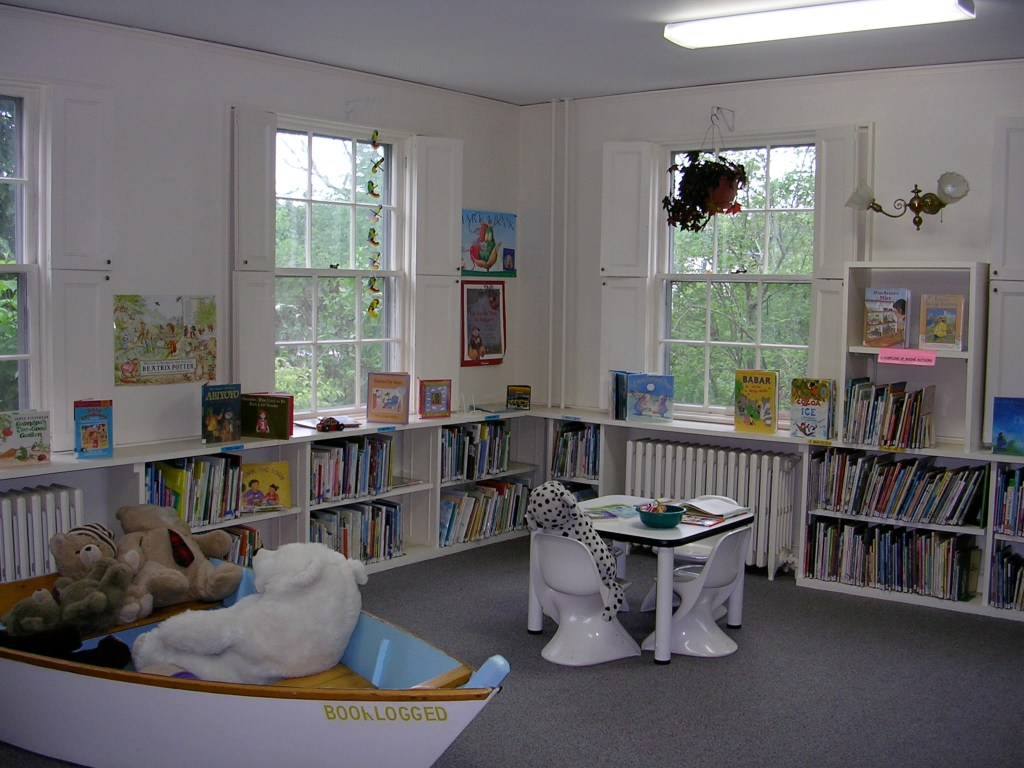

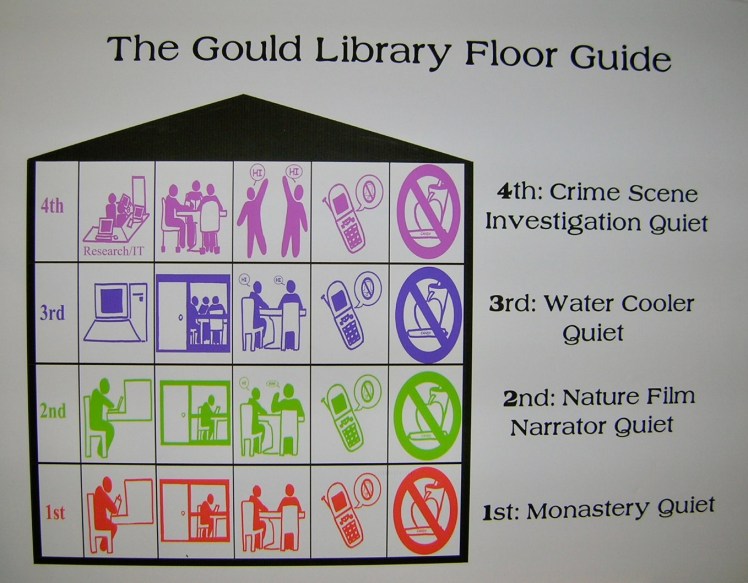
I could wax poetic about the many atmospheres to be enjoyed in libraries. The Suzallo Library at the University of Washington is grand and Gothic while the public libraries in Blue Hill and Ellsworth, Maine are cozy and homelike. Carleton College’s Gould Library (Northfield, Minnesota) upends the traditional “SShhh” with this poster at its entrance. I love a library with a sense of humor!
The Muehl Public Library in tiny Seymour, Wisconsin, caps off its summer reading program with a sleepover for the children’s stuffed animals, hosts a crochet quilting group and, as you can see, has terrific book talks!


Library of Congress

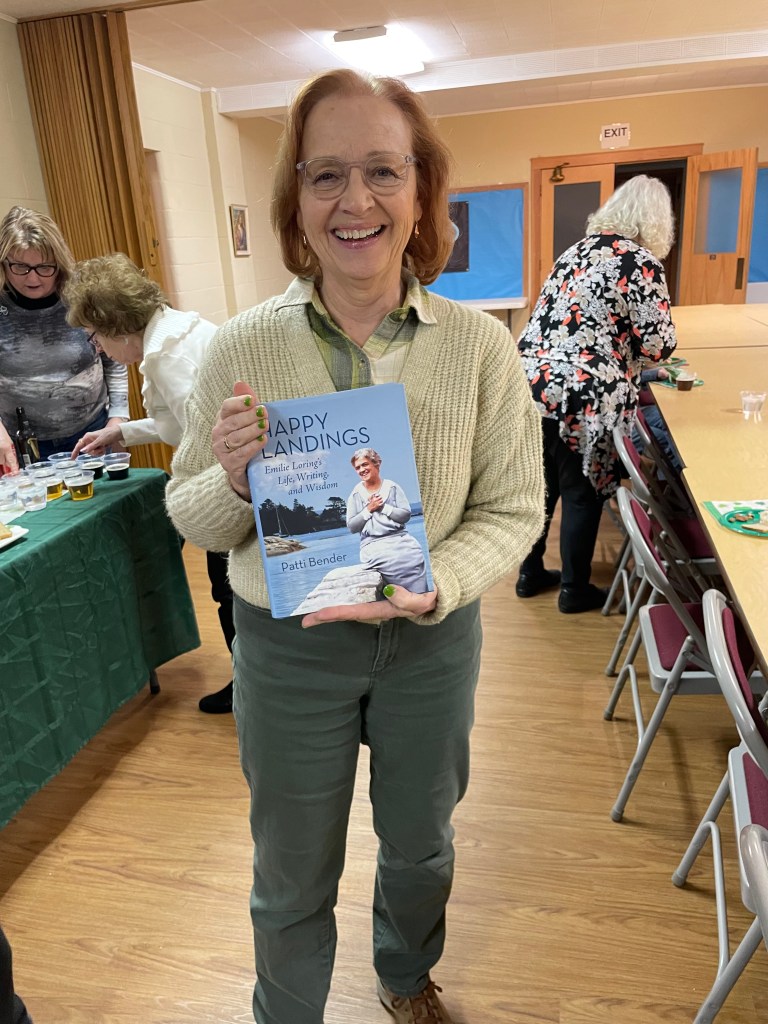
And of course, there is the nation’s library, the grandmother of them all, the Library of Congress. With over twenty million catalog records, the “LOC” collections are simply amazing. This is the only place that I have found a copy of The Mother in the Home, Emilie Loring’s (aka Josephine Story) second book. Happy Landings: Emilie Loring’s Life, Writing, and Wisdom has a home here, too, but it’s stored offsite, so you have to ask for it at the reading room. It’s a good thing you have your own copy! 😉
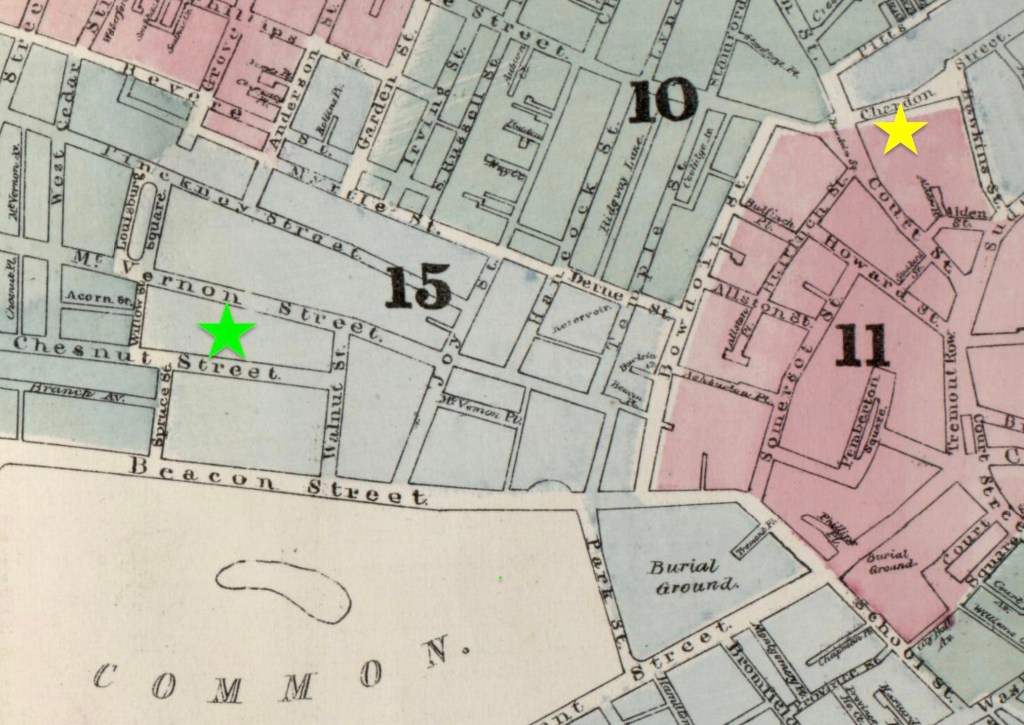
From home, I often use the LOC digital newspaper and map collections, which, like the rest of the library, are free to use, no membership required. Emilie was born in 1866 and lived on Chardon Street, which no longer exists. This 1867 Sanborn map shows that location (yellow star) and where she later lived, on Chestnut Street (green star).

Censorship
Emilie’s generation of authors had to contend with the New England Watch and Ward Society. Since the late 1800s, the group had banned books that stepped outside its narrow bounds–although the very fact that a book was “Banned in Boston” often increased its popularity elsewhere.
The Boston Authors Club stood in opposition and staunchly defended freedom of the press. Censorship, they said, not books, should be censored.
From Happy Landings: Emilie Loring’s Life, Writing, and Wisdom:
Emilie Loring was not a boundary pusher, but neither was she a prude or ignorant of contemporary society. Her books had already broken with three stipulations of the censorship code.
According to the guidelines, all crime had to be punished, and the criminal could not be portrayed sympathetically, but Millicent Hale (Lighted Windows) kills her husband, and the authorities agree it is only a tragic mistake. Authority had to be treated with respect, and clergy could not be made to look ridiculous or villainous, but Luther Calvin was portrayed as both in Swift Water. Scenes with real or suggested nudity were prohibited, but Julie Lorraine (Here Comes the Sun!) removes her wet dress and sits companionably with Jim Trafford, wearing only a borrowed robe and slippers, just minutes after first setting eyes on him. Now, Uncharted Seas touched on the banned topic of suicide.
Given her family history, this was no surprise. After all, her grandfather Albert Baker became a printer when speaking out in the press was still a dangerous thing to do. Some published anonymously to avoid retribution but not Albert Baker. Every place that his name was listed, whether others did or not, he entered, “Albert Baker, Printer.”
American Library Association
Emilie was ten when the American Library Association was created “to enable librarians to do their present work more easily and at less expense.” One hundred fifty years later, the nonprofit ALA still helps our nation’s 125,000 libraries by publishing best practice guidelines, providing in-service training for librarians, reviewing new books on the market, and advocating for the work of libraries to support education, literacy, and intellectual freedom as a public good.
Libraries are among the most trusted institutions in a community, but they face an onslaught of current challenges. These include bans on library materials and programming, funding cuts, and even threats to the safety of librarians and the collections entrusted to their care.
Penguin Random House offered a line of clothing for sale this week that celebrates the right to read. All profits from the “Reading is a Right” collection will go to the American Library Association.

There is a lot that we can do for our libraries. First, show up. Read the books, attend the programs, and donate used books to the annual sale. Get to know our librarians. If we need to find something, they are an invaluable resource!
This link shares additional ways that we can help in the current climate: Show Up For Our Libraries One of the attractive options is to simply share stories about our experiences in the library. Let’s not take them for granted; as go the libraries, so go we.


Love this post! When I was 8 years old I received my first library card at the public library in Independence, Kansas. That little piece of cardboard was my key to a world of riches. Libraries are such great places. I would dearly love to visit the Library of Congress one day. I’m reminded of the time I took my two little grandsons on their first trip to the library. They each chose several books and then we walked to the checkout desk. “Grandma, do we have to pay?” the oldest one asked. “No, we’re just borrowing them,” I answered. Isn’t it amazing we’re still able to keep libraries free?
LikeLiked by 1 person
That first library card is special! My son posed proudly with his when he was a little guy—a favorite photo of mine.
I value my membership at the MidContinent Public Library in Independence. Their genealogy library is terrific, and they provide access to a lot of valuable databases.
LikeLike
Aloha! Thank you for another informative post. I enjoyed it. It reminded me of my first library. It was the Kailua Public Library in Hawaii. I went into its doors with my forth grade class on a field trip. Got my first library card. Wow! It was a new world!! Outside was the community playground and tennis courts with the noise of many people, but inside it was so quiet I could think my very own thoughts. As I grew up, I learned how to use its many resources for school research and then later for medical research for a family member. It was an invaluable helper. Today I’m in another town but I still value the library resources. Including being able to order books to read through the Consortium. It is fun to see books from all over the country with names and initials of so many readers of the same materials. Including fellow Emily readers over the years. There are so many new offerings at the libraries and wonderful librarians who guide us. A treasure for sure. Have fun at you next library adventure. Thank you. Pam
LikeLiked by 1 person
I always read the names on the checkout card in case someone I knew had also checked out that book. There was a little sense of community in it, that all of us on the card had shared the same book. I bought myself a coffee mug that’s decorated with the image of a library card. It triggers happy memories.
LikeLike
I fondly remember riding my bike (with the huge balloon tires and wire basket) several miles to our local library in Norfolk, Nebraska. (It has now been replaced by a new library.) I still see the book shelves in my mind and know exactly where the books were placed that I read. Good times! With every new place I’ve moved in my long life, I have been quick to find the nearest library. I am unhappy to see so many interesting books being withdrawn from the library today. Even the famous Agatha Christie has only a few books available from our library system.
LikeLiked by 1 person
That’s a good idea for a blog post. Each generation has its own”standards” that they can’t imagine going out of style. For Emilie, it was Dickens and Scott. For us, Agatha Christie is a good choice. Who else?
LikeLike
this was a lovely read–thank you.
LikeLiked by 1 person
Dear Patti,
It was refreshing to see your library history and recall my library experiences as well at the University of Santo Tomas in Manila and all my years there, You documented so well the pictures of the libraries and since my best friend and sister, Karen Boyarsky worked with me at BHHS for 24 years, I had my classes in English and research at the library and enjoyed it immensely. Looking at the photo of Ellsworth library, I remember Ed spoke to the Navy League there and then the Library of Congress where I have the Ramsey Collection of Ed and Nadine.
Love and thanks for sharing Emilie’s time in libraries.
Raqui
LikeLiked by 1 person