I often look up the quotations in Emilie Loring’s books as clues to what she read. Alexandra caught a quotation in High of Heart that I hadn’t yet researched, and I scurried down a rabbit hole trying to find both its origin and the copy most likely to have caught Emilie’s eye.

And what I useter was
I think I’ve thrown myself away
Without sufficient cause.
Where did it come from?
I found versions of this passage in books and newspapers beginning in the mid 1800s. Using “was” in the second line to rhyme with “cause” in the fourth is grammatically awkward, but the die was cast long ago.
And when I think on what I am,
And what I used to was,
I feel I’ve thrown myself away
Without sufficient cause.
The Queen’s English: A Manual of Idiom and Usage, Henry Alford, 1888
Oh, when I think of what I am
And what I used to was
I think I gave myself away
Without sufficient cause.
Rocky Mountain News, 27 March 1887
Light dawned when the poem was given a title, “Julian’s Lament,” in an 1872 newspaper.
Julian's Lament:
When I behold how low I am,
And think what once I was;
I see I've thrown myself away--
Without sufficient cause!
Richmond Palladium, 12 October 1872
Julian. Julian… Who was Julian? A fictional character? A public figure?
In the 1860s, the quotation (paraphrase?) appeared in the proceedings of the House of Representatives of the State of Indiana and was also applied to Stephen Douglas after the famous Lincoln-Douglas debate. These were political references, applied with a scathing tone to the losing side of an argument.
When I do think now what I am, and what I used to was,
Methinks I sold myself away without sufficient cause.
Journal of the House of Representatives of the State of Indiana, 1863

The lines leapt the pond and moved back another decade when I found them in a British literary magazine.
Oh, when I thinks of what I is,
And what I used to was,
I find I've thrown myself away,
Without sufficient coz.
The British Controversialist: And Literary Magazine, 1859
How far was this going to go?! I thought about Julian again and started looking…
Oh my. Upon the death of the Emperor Julian, the orator Libanius wrote Oration 17, The Lament over Julian… around A.D. 364.
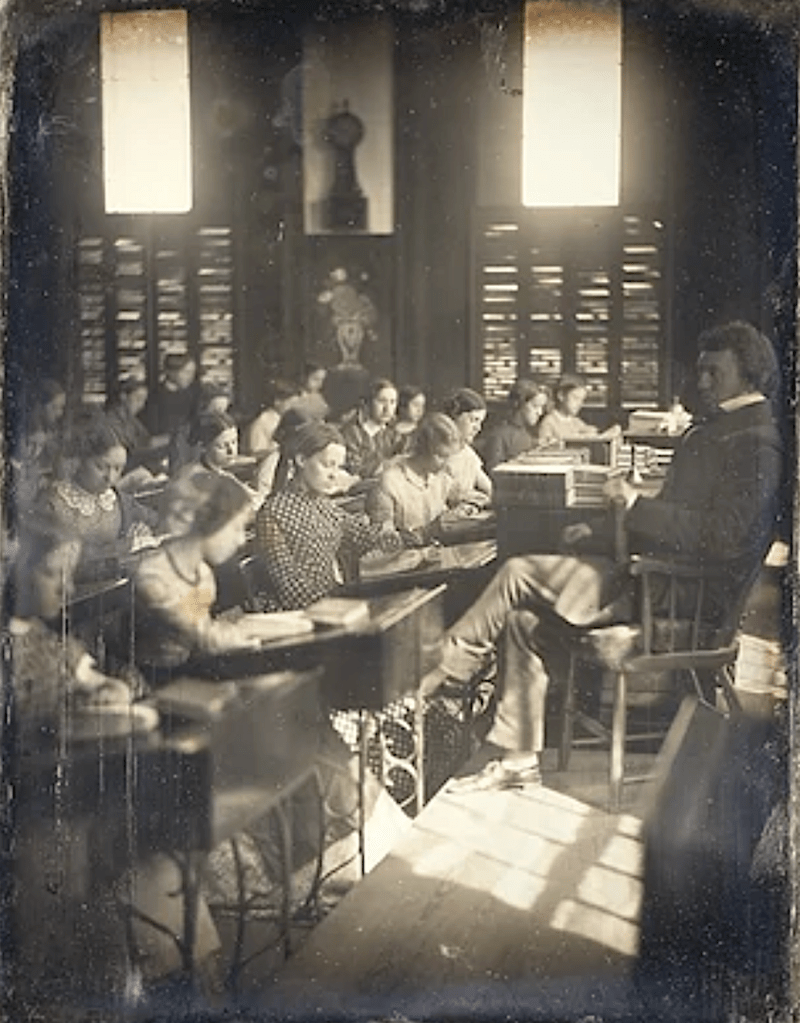
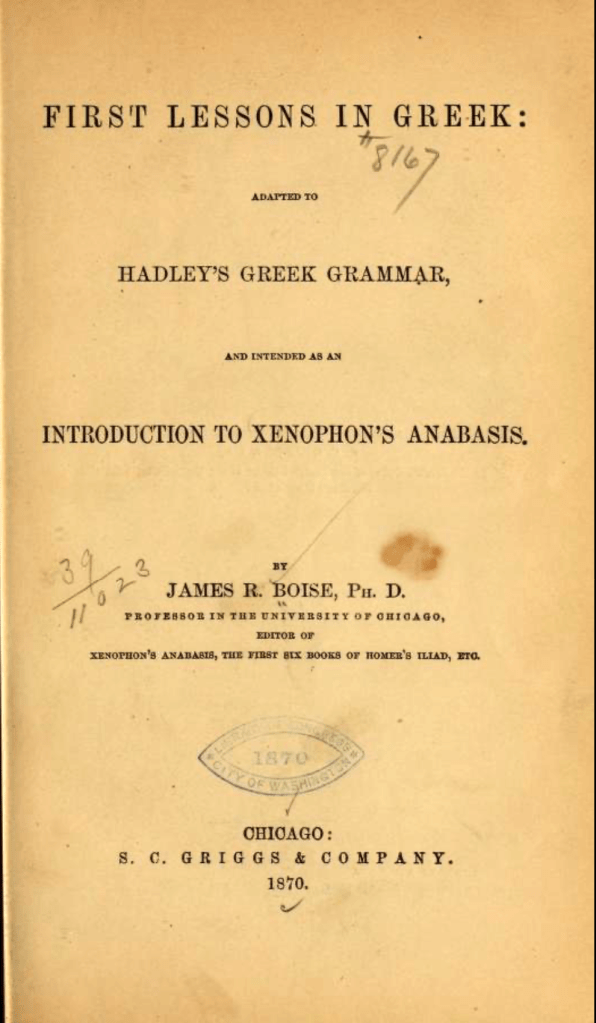
I remembered what Mary Ellen Chase wrote of her (and Emilie’s) generation: that they were the last who had learned Greek and Latin as a matter of course. It appears that these lines, frequently altered to suit local times, language, and purpose, are part of a deep cultural literacy–learned in school, remembered in essence, their origins and original forms often forgotten.
Eventually, they became part of our common lexicon, like these:
Time flies.
The die is cast.
Carpe diem. Seize the day.
To err is human.
Life is short.
Emilie’s Library
Although I’ve researched Emilie Loring for decades, there are two goals I’ve not yet completed. One is to diagram each of her gardens in full color and duplicate some of them in my own yard. Imagine it: strolling garden to garden, book to book. Feel inspired? https://pattibender.com/2016/02/18/emilie-lorings-gardens/
The other goal is to create a list of the books that Emilie read, insofar as we can figure that out. She mentions some titles by name in her books and quotes others. Add in her family’s books and those of her closest friends in the Boston Authors Club, plus the titles she read for her book reviews, those saved by the Lorings in their homes, and the Everyman’s Library titles that she bought for Stone House.
What on earth would I do with such a list? Well, first, I’d probably admire it. 🙂 But then, maybe we could read some of them together, sharing our comments either here or in some venue as yet to be created. Our one Zoom “Book Club” meet-up was a lot of fun; who knows what we might do next?
Let the ideas simmer. It’s going to take some time to develop that list, and first, I have a garden to dig and plant!
Gertrude Jekyll


Interesting and delightful. Do you have any additional allusions to Emperor Julian? I am writing apocalyptical fiction and would like to use his character as the primary antichrist and restorer of the Jewish Temple. Any sort of bits and pieces of info would do.
LikeLiked by 1 person
I would love to see sketches / paintings of Emilie Loring’s gardens! They really do have to be in color, don’t they. I would actually love to see artists’ renditions of gardens from her fiction, too. There’s something extra appealing and timeless about the beauty of colorful, established gardens around the anchor of an old family home.
And that’s an interesting idea to catalogue and read the books she mentions in her stories! I once had the thought to read through some old Chautauqua book lists, speaking of timeless appeal. Many of these old books are available online for free, through Gutenberg etc. I appreciate how you’re still finding colorful and interesting threads to follow from Emilie!
LikeLiked by 1 person
I used to lead a women’s Chautauqua group. It was so much fun!
Books and gardens can suggest conversations long into the future! After finishing the book, I had one of those little slumps that comes upon completion of any big task. Now, I’m rested and getting new ideas again!
LikeLike
Dear Patti,
You never seize to amaze me with your nuances and aspects of Emilie Loring! SEIZE THE DAY! CARPE DIEM is my Philosophy!
I would love to explore your list of her readings and see her garden as you make yours. INCREDIBLE!
HAPPY EASTER!
Love and Blessings,
Raqui
LikeLiked by 1 person
I LOVE a good rabbit hole…and I think the bookclub sounds absolutely fascinating.
LikeLiked by 1 person
Dear Patti,
What fascinating research on the quotations in Emilie’s books and her gardens. There is always something new to learn! It has been quite cold and rainy here, but Spring flowers are blooming, and trees are blossoming – hoping we get some sunshine soon!
LikeLiked by 1 person