And the fiery whirlwind, fierce and vast
“Ashes of Roses,” George M. Baker
Hurried away in the mouldering past.
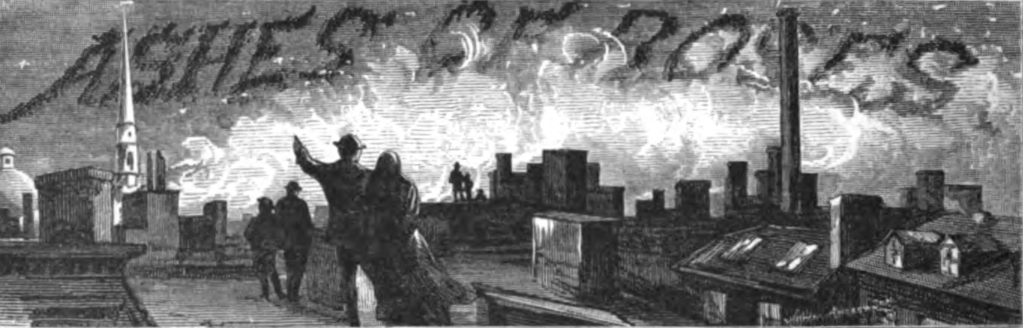
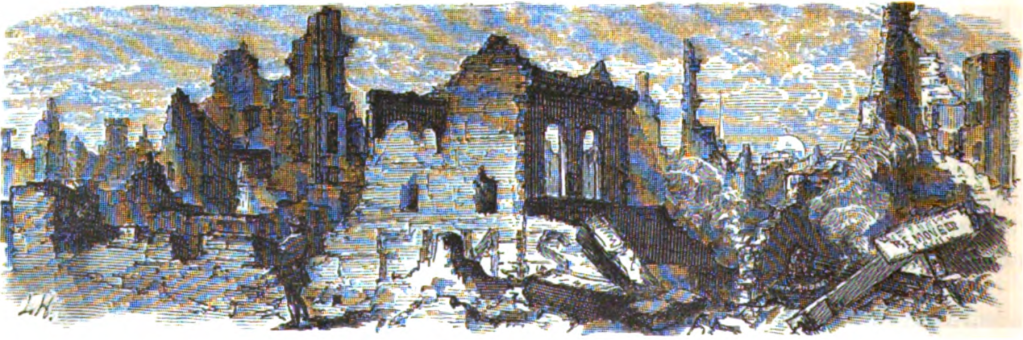
The Great Boston Fire of 1872 started in a six-story granite building and burned through downtown Boston for two days, destroying 776 buildings over 65 acres. Eleven firemen and fifteen civilians were killed. The monetary loss was staggering.
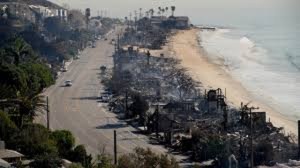
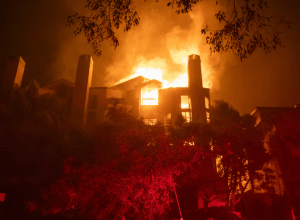
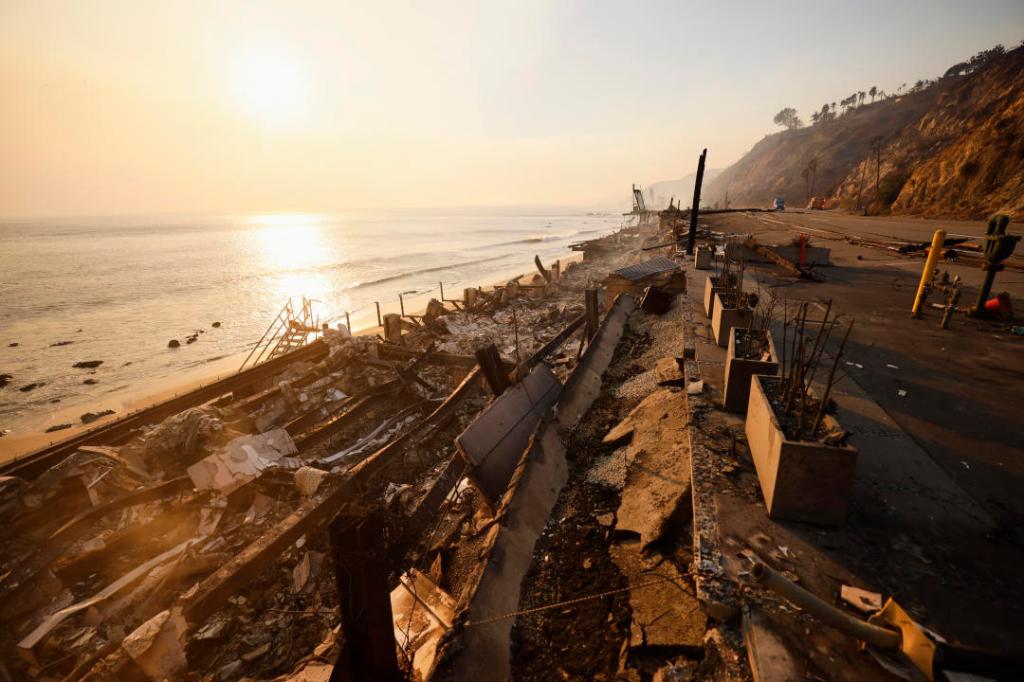
The fires ravaging Los Angeles this past week are magnitudes greater in size, their destruction impossible to fathom. But the losses are also individual, house by house, business by business, street by street, person by person.
When the smoke cleared, George Melville Baker wrote “Ashes of Roses,” a poem of both acknowledgment and hope. With my California friends in mind, I share a portion today.
Now, on this self-same Saturday night,
Fire arose in his crafty might,
The slave of man threw off his yoke,
From fettering chains defiant broke,
And stealthily seizing the sceptre of power,
The tyrant master ruled the hour.
With a sneer at the parson’s faltering heart,
Reckless assuming the preacher’s art,
He wrought a sermon so strong and clear,
That a crowded city quaked with fear.
And they whom fortune favored most
Awoke from their dreams to see its ghost
Vanish in flame. Rich spoils of trade,
In many a strong-walled fortress laid;
Vast stores from far-off Eastern lands;
Wealthy productions of gifted hands;
Cunning machines, by craftsmen reared,
In his greedy jaws quick disappeared.

And grand old churches, massive and gray,
The gospel’s sentries along the way,
Reared in love and baptized in prayer,
With passports of faith to a land more fair,
Our blessed symbols of trust in God,
Cowered beneath the fiery rod;
And merchant palaces far and wide,
Towering in beauty, the city’s pride,
Prosperity’s roses in gardens of trade,
By his blasting breath in ashes were laid.
Then, glutted with spoils, in sudden wrath
He sped away on his fiery path,
And dashed with a roar into labor’s nest,
Where, home returned for Sunday rest,
The wearied toiler nobly strove
To keep gaunt want from his home of love;
Merciless crawled on the rotting floor,
And snatched the crust from the starving poor;
With fiery fingers beckoned on
The aged man from his homestead torn,
Who sought to return, and meet his death
In the house where first he drew his breath,
Whom friendly counsel held aloof
From the crushing blows of his falling roof.
Up and away on the rushing wind,
Terror before and blackness behind,
Heavy smoke clouds roll across the sky,
Hissing brands in thick battalions fly,
Shrivelled rafters seething, writhe and crawl,
Blasted walls in wild confusion fall,
Dragging down to a horrible death,
Stifling their outcries with blistering breath,
The fearless and brave who strove with might,
To be crushed at last in unequal fight.
Ah, many a wife, in slumbers secure
Shall weep for the mate who comes no more,
And many a mother miss from her side
The joy of her heart, its love and pride,
And many a home in confident rest
This night shall rob of its dearest and best.
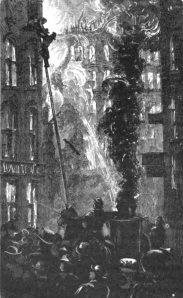

Hard was the struggle that Sabbath day
To keep the fiery pest at bay,
While sickening fear and wild unrest
Pierced and tortured the anxious breast;
But stalwart heroes lashed and beat
The snarling fiend in his last retreat,
Till crushing blows and smothering rain
Drove the slave to his chains again.
Up, up once more when the night comes down,
With thundering roars and a flaming frown,
He breaks from his prison and sallies out,
Torture and terror to scatter about,
Recklessly dashes frail barriers through,
And on, dashes on to destruction anew.
Sports with rich treasures of silver and gold,
Drags from their slumbers the young and the old,
Climbs to the chamber of innocent rest,
Wakens the mother and babe on her breast,
Then fiercer and faster dashes along,
His revel of ruin to further prolong.
But all in vain; the steady strokes down fall,
And well-poised weapons nail him to the wall,
While watchful guards the terror hold secure.
Once more he’s conquered, and the battle’s o’er.

Ashes of Roses! Beauty lies crushed;
Into our garden the whirlwind has rushed,
Blasting the garners of riches and pride,
Breaking the strength that misfortune defied,
Rending warm life from the hopeful and brave,
Shrouding our joys with the gloom of the grave.
Over the reeking and desolate scene
The moon in full glory up rises serene
Through drifting smoke clouds stray beams fitful fall
On broken arch, on black and splintered wall.
Strange watch fires flick and glow along the street;
The trusty guard patrols his measured beat.
And tap of drum, quick tramp, and stern command
Proclaim the presence of a martial band,
While far and wide a people sick in sorrow,
Anxiously wait the coming of tomorrow.
Tomorrow! ah, yes, it will bring relief,
Though its coming perchance be fraught with grief;
For under the embers lie riches in store
The anxious merchant hastes to secure,
While doubt and fear assail his breast,
As the safe is torn from its fiery rest;
For there is his fate, and he turns aside
As the door from its stubborn door is pried;
For there are treasures to rear more fair,
Or dust and ashes to bring despair.
Tomorrow may bring to the trouble-tost
Glad tidings of joy from the loved and lost;
To-morrow may bring hope’s cheery beam,
And out of the darkness warm light stream;
For all is not lost while honor survives,
And success oft journeys with him who strives.
To-morrow beauty from ashes shall spring,
And labor’s hammer right merrily ring,
And the fiery whirlwind, fierce and vast,
Hurried away in the mouldering past.

Take care, friends. Happy Landings!
 The Emilie Loring Collection
This certainly paints a harrowing picture of the Boston fire and the similarities to the California fires are eerie. On a side note, the title of this poem reminds me of a perfume called “Ashes of Roses’ which was popular in the early part of the 20th century. I’ve never smelled it, but I’ve seen it mentioned in several novels written during that time period. Perhaps Emilie’s was one of them?
LikeLiked by 1 person
Interesting! Something I read recently had “Attar of Roses,” but that may have been Elizabeth Peters, not Emilie.
LikeLike